

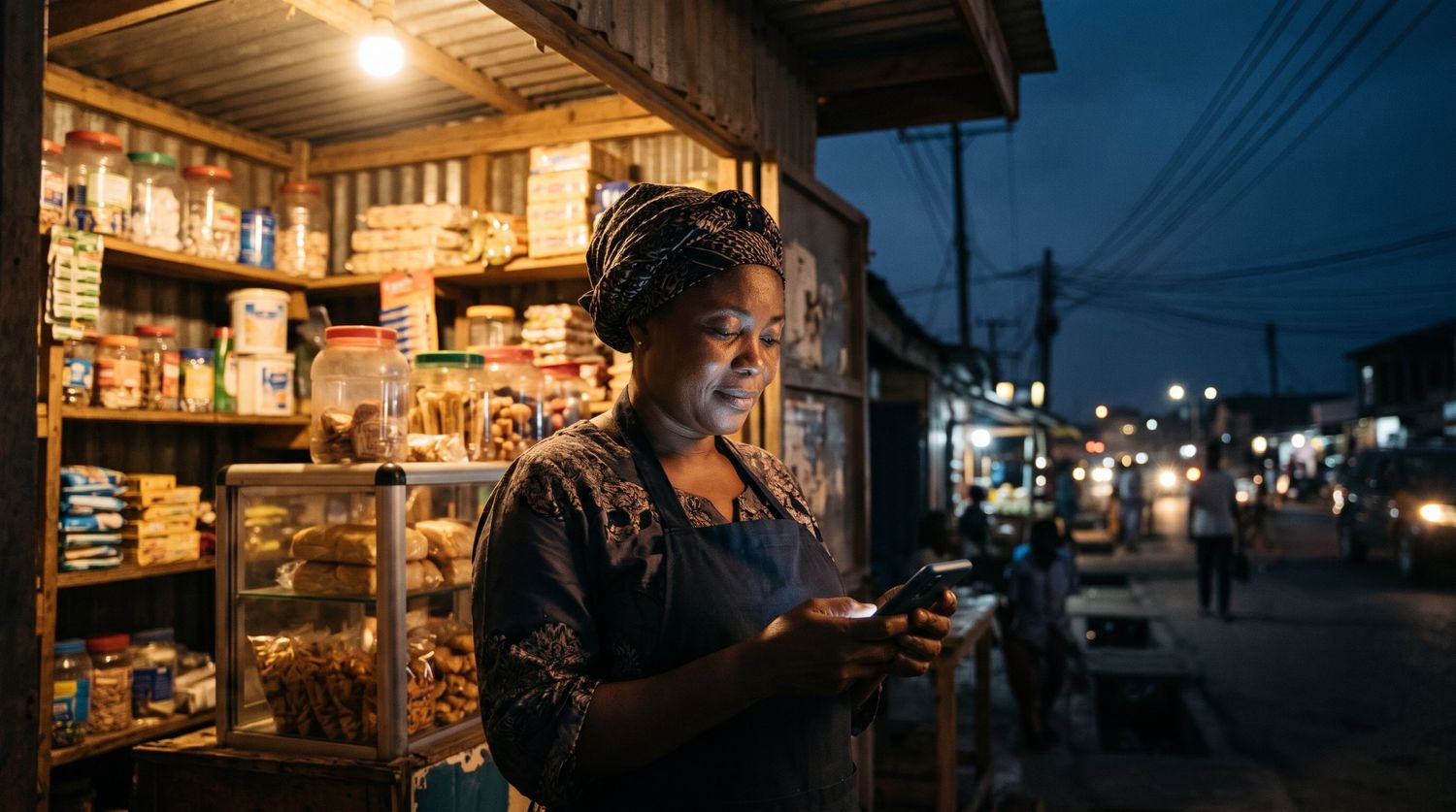
For a large share of businesses in Ghana, WhatsApp is not a marketing channel. It is the shop floor. The catalogue is sent there, the price is agreed there and the sale closes there.
Which raises an uncomfortable question: what happens to the messages that arrive when nobody is free to answer?
Why the loss is invisible
A customer who messages at 10pm and hears nothing until morning does not usually complain. They buy from whoever replied first. No refund, no record, no line in the accounts. The sale simply never existed, so it never appears in any report the owner reads.
Measure it in two weeks
You do not need software to estimate this. For fourteen days, keep a simple tally:
- Every message that arrives outside the hours someone is actively answering.
- How long each one waited for a first reply.
- How many of those conversations turned into a sale.
Compare the conversion rate of messages answered within minutes against those answered hours later. The gap between the two, multiplied by your average order value, is a reasonable estimate of what slow replies are costing you.
A worked illustration
Take a hypothetical restaurant that receives 40 messages a week after 9pm, with an average order of GH₵150. Suppose quick replies convert at around half, and replies the next morning convert at around one in ten. On those assumptions, answering instantly rather than the next day would be worth roughly 16 extra orders a week.
The numbers are illustrative, not data. Your own tally will tell you the real ones, and they are often higher than owners expect.
The second loss: the record
Even the conversations that do convert usually leave nothing behind. Hundreds of chats a month, and no list of who the repeat customers are, what they order or when they stopped coming back. That record is where repeat sales come from, and most businesses discard it without noticing.
What good looks like
An assistant that replies in seconds at any hour, answers from the business's own menu and prices, takes the order, confirms payment, and hands anything unusual to a person. Every conversation becomes a customer record.
That is what we built Kasa-bot to do. But start with the tally. If the numbers are small, you do not need it. If they are large, you will know exactly what it is worth.
The worked example uses hypothetical figures to illustrate the method. It is not based on any specific client's results.